
The Harmonized Tariff Schedule (HTS) is regulated through a complex system of international agreements and government oversight. Tariffs are imposed on imported goods based on their classification within the HTS. Each country has its own regulations on how the HTS is implemented, leading to potential discrepancies in duties. Understanding how the HTS is regulated is crucial for businesses involved in international trade to navigate the complexities and ensure compliance. Let’s delve deeper into the mechanisms that govern the HTS and its impact on global trade.

How is the Harmonized Tariff Schedule Regulated?
Welcome to our blog where we explore the fascinating world of trade regulations. In today’s discussion, we will delve into the topic of how the Harmonized Tariff Schedule (HTS) is regulated. The HTS is a crucial aspect of international trade, as it helps classify goods for import and export duties. Understanding how the HTS is regulated is essential for businesses and individuals involved in global trade. Let’s unravel the complexities and shed light on this important subject.
The Role of Customs and Border Protection (CBP)
When it comes to regulating the HTS, one of the key players is the Customs and Border Protection (CBP) agency. CBP is responsible for enforcing the HTS and ensuring compliance with trade laws and regulations. The agency plays a vital role in classifying goods, determining duty rates, and preventing illegal trade practices.
CBP works closely with importers and exporters to ensure that the HTS is applied correctly to all goods entering or leaving the country. Through thorough inspections and audits, CBP helps maintain the integrity of the HTS and promotes fair trade practices.
Harmonized System Committee
Another important aspect of how the HTS is regulated is the involvement of the Harmonized System Committee. This international committee, comprised of representatives from various countries, oversees the development and maintenance of the Harmonized System (HS) – the global standard for classifying goods.
The Harmonized System Committee meets regularly to review and update the HS to reflect changes in technology, trade patterns, and market trends. These updates are crucial for ensuring the accuracy and relevance of the HTS, which is based on the HS.
Customs Rulings and Appeals
When it comes to disputes or questions about the classification of goods under the HTS, importers and exporters can seek clarification through customs rulings and appeals. Customs rulings provide official guidance on how a particular product should be classified under the HTS.
If an importer or exporter disagrees with a customs ruling, they have the right to appeal the decision through the appropriate channels. This process allows for a fair and transparent resolution of classification issues, ensuring that the HTS is applied accurately and consistently.
Penalties and Enforcement
Enforcing the HTS is essential for maintaining the integrity of the global trade system. CBP has the authority to impose penalties on individuals or businesses that violate HTS regulations, such as misclassifying goods or evading duties.
Penalties for HTS violations can range from fines to criminal prosecution, depending on the severity of the offense. By imposing penalties and enforcing compliance, CBP helps deter illegal trade practices and protect the revenue of the government.
Trade Agreements and Tariff Modifications
Trade agreements between countries can also impact how the HTS is regulated. These agreements may involve tariff modifications, exemptions, or special provisions that affect the classification and duty rates applied to certain goods.
It is essential for businesses and individuals involved in international trade to stay informed about trade agreements and tariff modifications that could impact the HTS. By understanding these changes, they can ensure compliance with regulations and take advantage of any benefits provided by trade agreements.
In conclusion, the regulation of the Harmonized Tariff Schedule is a complex but essential aspect of international trade. By understanding how the HTS is regulated and enforced, businesses and individuals can navigate the complexities of global trade more effectively and ensure compliance with trade laws and regulations.
Customs and Border Protection, the Harmonized System Committee, customs rulings and appeals, penalties and enforcement, and trade agreements all play vital roles in regulating the HTS. By working together, these entities help maintain the integrity of the global trade system and promote fair and transparent trade practices.
We hope this blog post has provided you with valuable insights into how the HTS is regulated. If you have any questions or would like to learn more about this topic, feel free to reach out to us. Stay tuned for more informative content on trade regulations and international commerce!
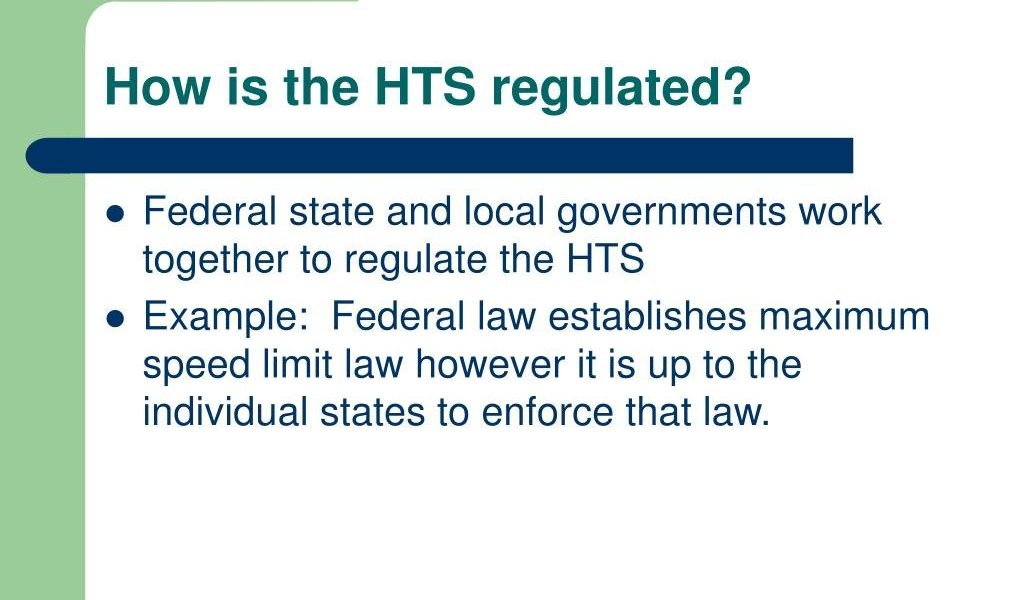
1-1 Review It Questions square 2. How is the HTS regulated? 1-2 Review It Questions 1. How does the
Frequently Asked Questions
How are Harmonized Tariff Schedule (HTS) regulations enforced?
The enforcement of the Harmonized Tariff Schedule regulations is overseen by customs authorities in different countries. They monitor and assess imports and exports to ensure compliance with the HTS codes and related regulations.
What are the consequences of non-compliance with HTS regulations?
Non-compliance with HTS regulations can result in penalties, fines, and customs delays. Failure to properly classify goods under the correct HTS code can lead to financial losses and legal issues for importers and exporters.
Who is responsible for ensuring compliance with HTS regulations?
Both importers and exporters are responsible for ensuring compliance with HTS regulations. It is crucial for businesses to accurately classify their products under the appropriate HTS codes to avoid any potential issues with customs authorities.
How can businesses stay updated with changes in HTS regulations?
Businesses can stay updated with changes in HTS regulations by regularly checking for updates on official customs websites, attending relevant training sessions or seminars, and consulting with customs brokers or trade experts for guidance.
Final Thoughts
In conclusion, the regulation of Harmonized Tariff Schedule (HTS) is overseen by various authorities globally. Customs agencies enforce HTS classifications to ensure accurate tariffs. Importers must diligently determine the correct HTS code for their goods to comply with regulations. Regular updates and communication with customs officials are essential to stay informed on how the HTS is regulated.